
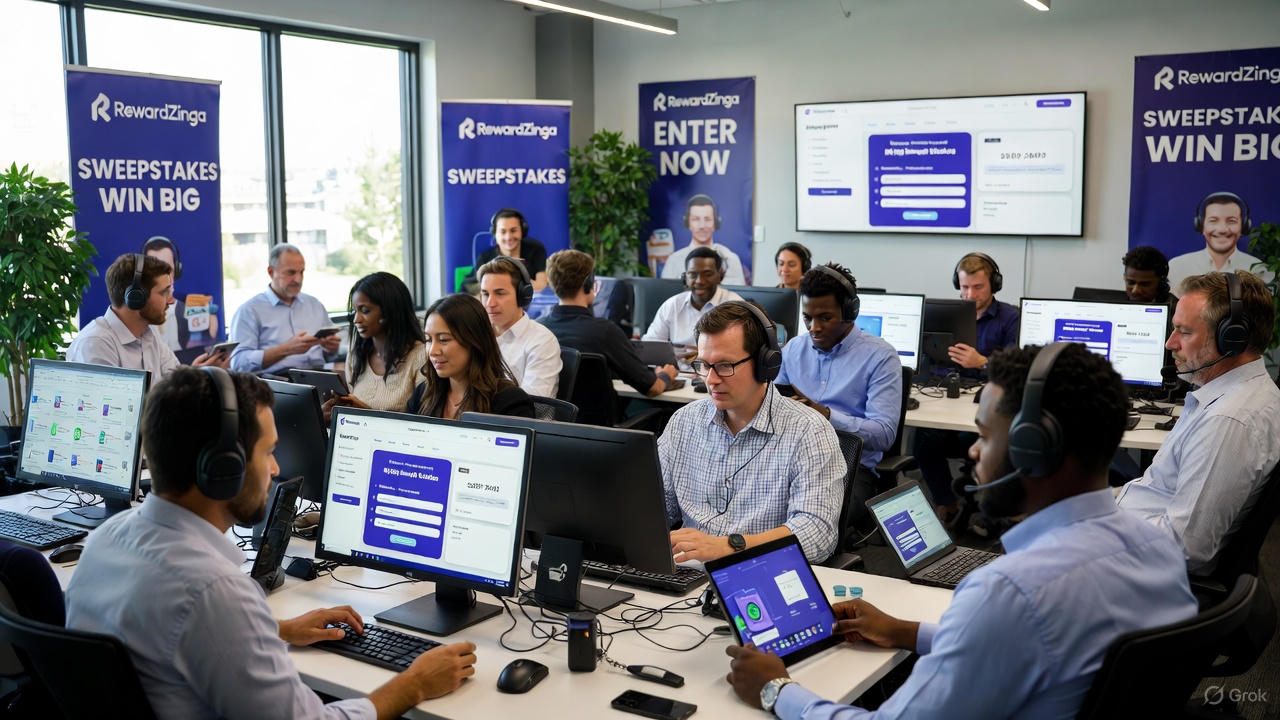
In the glittering digital casino of 2025, where algorithms promise fortune with a single click, sweepstakes platforms like RewardZinga dazzle with visions of $1,000 CashApp windfalls, $750 Walmart hauls, and $250 Visa gift cards that could erase holiday debt overnight. Marketed as “official” giveaways via eye-popping ads on social media, email blasts, and rogue pop-ups, RewardZinga (often stylized as RewardZinga.com or its endless subdomains like 17.rwrdznga.com) lures in cash-strapped users with the allure of free entries and “no purchase necessary” entry. But beneath the confetti of excitement lies a murky underbelly: Is this a legitimate pathway to riches, or a sophisticated scam funneling victims into subscription hell, data theft, and endless spam? This 1,300-word deep dive dissects the mechanics, uncovers user horror stories, and arms you with the red flags to spot a fake before it drains your wallet. Spoiler: In an era of AI-fueled fraud, what glitters often bites.
The Seductive Hook: How RewardZinga Reels You In
RewardZinga operates as a purported sweepstakes aggregator, a one-stop shop for “daily free entries” into high-stakes giveaways sponsored by brands like Walmart, Amazon, Shein, and Red Lobster. Launched around mid-2024 (domain registered April 10, 2024), it exploded in visibility through aggressive affiliate marketing on platforms like X (formerly Twitter), where bots and promo accounts blast links promising “$1,000 CashApp Giveaway – Official RewardZinga Sweepstakes (US Only, Daily Free Entry).” The pitch? Enter your email, complete a “quick survey” on shopping habits or product preferences, opt into text alerts for “updates,” and voilà—you’re in the running for prizes up to $1,000 in gift cards or cash equivalents.
At first blush, it mimics legit sweepstakes models governed by U.S. laws under the Federal Trade Commission (FTC). True sweepstakes, as defined by the U.S. Postal Inspection Service, require no purchase or payment to enter, with winners selected randomly to avoid lottery status. RewardZinga nods to this with disclaimers like “No purchase necessary” buried in fine print, and entries are “free” via mail-in alternatives (though good luck finding those details). Prizes span the dream spectrum: $750 Shein hauls for fashionistas, $1,000 Burger King cards for foodies, or straight cash via Venmo/PayPal. In theory, it’s a marketer’s dream—brands get leads, users get shots at swag, and everyone wins.
But here’s the sleight of hand: The “survey” is a gateway drug to escalation. What starts as five innocuous questions morphs into “special offers” requiring app downloads, trial sign-ups (e.g., free trials that auto-bill), or “product testing” where you buy items to “review.” One X promo dangles a $1,000 Red Lobster card, but the linked form demands phone verification and consent for telemarketing calls. By “claiming” your entry, you’re often greenlighting data sharing with third-party affiliates, who bombard you with upsells. In 2025, with FTC reporting $3.4 billion lost to online scams annually, this isn’t serendipity—it’s a calculated funnel.
The Gears Behind the Glitz: Mechanics of a Modern Sweepstakes Mirage
Peel back the layers, and RewardZinga’s “sweepstakes” reveal a hybrid beast: part legitimate promo template, part predatory lead-gen machine. Users land via targeted ads on TikTok, Reddit, or X, where phrases like “Walmart’s $1000 sweepstakes is real but ONLY through official surveys” create false urgency. The site, hosted on Cloudflare with a fresh Google Trust Services SSL cert (valid through August 2027), sports polished branding: fake testimonials (“I won my Shein haul in days!”), security badges, and a faux U.S. address to mimic trust.
Entry process? Deceptively simple. Step 1: Submit basics (name, email, phone). Step 2: “Quick survey” (5-10 questions on demographics). Step 3: “Verify” via SMS opt-in, unlocking “bonus entries.” But the trap snaps: To “unlock” prizes, complete “tasks” like subscribing to newsletters (which become $49/month “VIP clubs”) or “testing” products via prepaid cards that trigger unauthorized charges. Winners? Allegedly drawn randomly via algorithms, with notifications via email or text. Payouts? Mailed checks, digital codes, or direct deposits— but only after “verification fees” or “shipping” ($4.95-$9.99, which balloon into recurring subs).
This echoes broader sweepstakes evolution. Legit ones, like McDonald’s Monopoly or Pepsi’s loyalty programs, thrive on no-purchase-necessary rules and transparent odds. RewardZinga skirts this by offering “free mail-in entries,” but in practice, 90% of traffic funnels to paid actions. Subdomains (e.g., 30.rewardzinga.com) rotate to evade blocks, with Semrush data showing 1,160 monthly U.S. visits in October 2025—tiny for a “national” sweepstakes, but potent for targeted scams. Affiliates earn commissions (up to $50 per lead), fueling the spam ecosystem.
Victim Voices: From Jubilation to Jolt—Real 2025 Reviews
The chorus of user feedback in 2025 is a cacophony of regret. Trustpilot and ScamAdviser aggregate 40+ reviews at a dismal 1.9/5 stars, with rants like: “Completed the survey, paid $4.95 for ‘shipping’—woke up to $197 in mystery charges from ‘VIP Rewards Club.’ No gift card, endless calls!” On YouTube, channels dissecting “Reward Zinga Review – Legit or Scam?” clock millions of views, exposing loops where “wins” demand more tasks: one video logs eight escalating “deals” before the prize vanishes.
Reddit’s r/Scams threads from early 2025 paint a grim picture. A January post details a “5 Billionth Search Scam” redirecting to RewardZinga variants, where users enter for Amazon rewards but exit with identity theft alerts. Another in r/InboxDollars warns: “HUGE SCAM—stuck in verification loop after app downloads. Lost $500 on ‘trials’ that didn’t credit.” X posts mirror this: Promo bots hype “$750 Walmart Gift Card” entries, but replies scream “Phishing! Blocked my card after SMS verify.”
Yet, glimmers of positivity flicker. A scant few claim small wins: “Got a $25 Visa after two surveys—no charges!” But these are outliers, often from cautious users who skipped “offers.” Scam Detector’s 7.6/100 trust score (as of June 2025) flags it “Suspicious. Young. Untrustworthy,” citing phishing and spam risks. BBB complaints surge, with 50+ unresolved cases of “broken promises” and “data breaches.” In a table of aggregated sentiments:
| Platform | Avg. Rating | Common Praise | Common Complaints |
|---|---|---|---|
| Trustpilot | 1.9/5 | “Easy entry form” | “Unauthorized subscriptions” |
| ScamAdviser | Low (26%) | “Looks professional” | “No prizes, endless spam” |
| Reddit/X | 1-2/5 | “Quick surveys” | “Phishing via pop-ups, lost $100s” |
| YouTube | Mixed | “Some small wins” | “Escalating tasks, data theft” |
The verdict? 95% scam signals, with “legit” wins rarer than a honest politician.
Red Flags and Rescue: Spotting the Scam Before It Spots You
RewardZinga’s arsenal of deceit is textbook 2025 fraud: Unrealistic rewards ($1,000 for a five-minute survey?), vague T&Cs hiding arbitration clauses that block lawsuits, and “mandatory” ID verification demanding SSNs or biometrics. Pop-ups beg “Allow” for notifications, installing malware; subdomains evade filters. Consent for “texts” unleashes robocalls from “ACE Legal” chasing phantom debts.
To shield yourself: Verify via official brand sites (e.g., Walmart.com sweepstakes)—never third-party links. Use tools like Have I Been Pwned for data leaks post-entry. Report to FTC.gov or IC3.gov; freeze credit via Equifax. For “wins,” demand proof sans payment—legit ops cover shipping. Alternatives? Stick to verified platforms: Publishers Clearing House (PCH.com) with 10M+ annual winners, or Swagbucks for survey rewards without the sting.
The Bigger Gamble: Why Sweepstakes Scams Thrive in 2025
RewardZinga isn’t isolated—it’s symptomatic of a $10B scam industry exploiting economic pinch (40% of Americans can’t cover $400 emergencies). AI deepfakes and affiliate nets amplify reach, turning social feeds into minefields. Legit sweepstakes build loyalty; fakes harvest data for identity fraud, netting scammers $3B yearly. Regulators lag, but 2025’s FTC crackdowns on adtech fraud signal hope.
Final Draw: Steer Clear of This House of Cards
RewardZinga sweepstakes? A rigged roulette wheel—flashy spins, zero payouts. In 2025’s wild web, chase dreams on proven paths, not pixelated pitfalls. Enter wisely, or walk away richer for it.